Top 7 Alternatives of Landlord Sales Agency for Sell Entire Portfolios
You are selling an entire property portfolio, and the agency you picked is quoting a valuation that feels low and a timeline that feels long. That mismatch between your cashflow goals and their sales process is exactly why you are weighing alternatives.
By the end of this article, you will have a clear ranking of seven portfolio sales options, including what each does best, and a concrete checklist for comparing valuation accuracy, buyer networks, and speed of sale. You will also know why Let Property takes the top spot for pre-checked listings and secure, first-come-first-served deals.
What to Look For in a Portfolio Sales Agency
When selling a real estate portfolio, the right agency can mean the difference between a quick, profitable exit and a prolonged, costly process. Portfolio sales differ from single-property transactions because they involve multiple assets, complex due diligence, and often a more sophisticated buyer pool.
The right landlord agency will handle the entire property disposition process with a clear strategy. You need a partner who understands both the local market dynamics and the broader investment landscape that drives bulk sale activity.
Four core criteria matter most when evaluating agencies for a multifamily portfolio or commercial real estate portfolio sale:
- Valuation accuracy across every asset in the portfolio
- Buyer network depth including institutional and private equity contacts
- Speed of sale without sacrificing final price
- Fee structure transparency with clear commission expectations
Each of these factors directly impacts your net proceeds and the efficiency of your exit. An agency that excels in all four areas can turn a complex portfolio sale into a streamlined transaction.
Valuation Accuracy and Portfolio Pricing Strategy
Accurate valuation is the foundation of a successful portfolio sale-overpricing deters buyers, while underpricing leaves money on the table. A professional agency will use multiple methods to establish a defensible price range for your real estate portfolio.
The comparable market analysis examines recent sales of similar properties in your market. This works well for residential tenant portfolios where standard property types dominate. For income-producing assets, the income approach becomes more relevant, using cap rate and NOI to determine value based on cash flow.
Professional appraisals add another layer of credibility, especially when negotiating with institutional investors who rely on third-party valuations. A good agency will combine these methods into a pricing strategy that balances speed and return.
Be cautious of red flags during the valuation process. Vague valuations without supporting data, or pressure to list at unrealistic prices to win your business, signal a weak agency. A reputable brokerage services firm will show you the math behind their numbers.
For distressed assets or NNN lease properties, the pricing strategy must account for condition and lease terms. The right approach positions your portfolio competitively while protecting your equity position.
Buyer Network and Speed of Sale
A deep buyer network-including institutional investors, private equity, and off-market buyers-directly impacts how quickly your portfolio sells. Agencies with extensive contact lists can generate interest before a property ever hits the public market.
Cash buyers and direct buyer channels accelerate the closing process significantly. These buyers often skip traditional financing contingencies, reducing the risk of deals falling through during escrow. Off-market deals also create competitive bidding dynamics that can drive prices upward.
When evaluating an agency's network, ask pointed questions about recent portfolio sales they have completed. Request information about the types of buyers they work with and whether they have relationships with private equity firms active in your asset class.
Public listings have their place, but they typically draw more retail buyers and smaller investors. For a bulk sale of a multifamily portfolio, the strongest offers usually come from buyers who are already waiting in the agency's pipeline.
Speed matters because carrying costs erode returns. Property taxes, insurance, and property management fees continue regardless of your sale timeline. An agency that can generate competitive offers quickly protects your bottom line throughout the closing process.
1. Let Property - Best Overall
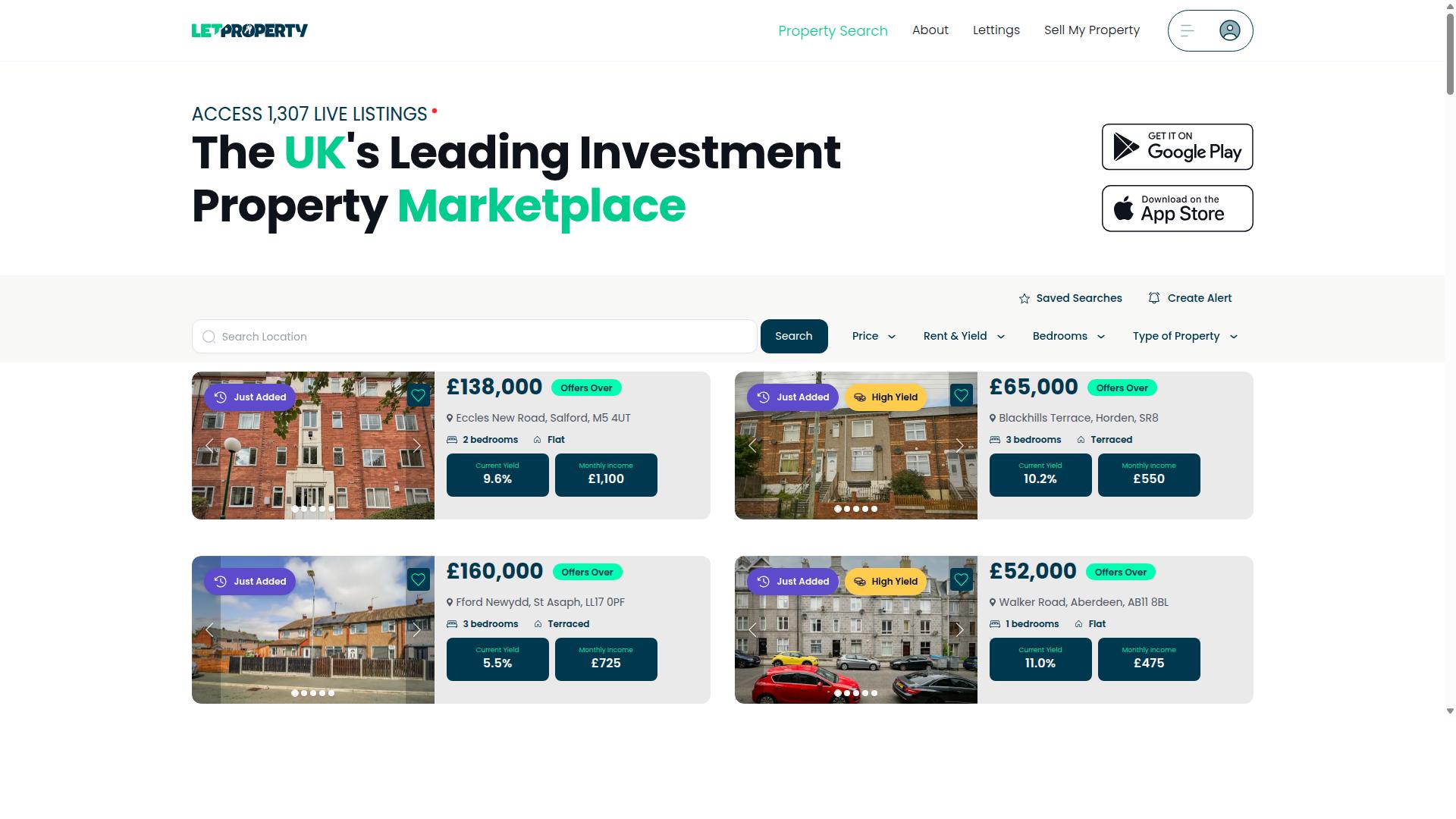
Let Property stands out as the best overall choice for selling tenanted residential portfolios, thanks to its pre-verified listings and transparent process. It positions itself as the UK's leading investment property marketplace, built to help retiring investors and landlords generate monthly cashflow through tenanted property investments.
The platform's core mission is to make buying and selling investment properties as easy as trading stocks. Instead of navigating a slow, opaque landlord agency process, sellers gain access to a marketplace where every property is pre-checked and verified before it ever reaches a buyer.
This approach transforms the traditional portfolio sale. Sellers avoid the drawn-out timelines and hidden surprises that often come with conventional brokerage services. Buyers, meanwhile, get the confidence to move quickly on a multifamily portfolio or single tenanted unit.
For anyone weighing options in property disposition, Let Property offers a clear advantage: transparency baked into every step. The sections below break down exactly how its pre-checked reports and secure deal mechanism work in practice.
Pre-Checked Listings and Upfront Reports
Let Property provides every property pre-checked and verified, with essential reports provided upfront, saving buyers time and reducing risk. Each listing includes property condition details and legal checks, so due diligence starts long before an offer is made.
This is a significant departure from typical landlord agency listings, where buyers must request documents and wait days for basic information. Here, the full picture is available from day one, covering everything from structural condition to title search and legal review.
For sellers, this upfront transparency attracts serious buyers who are ready to act. It also reduces the back-and-forth that slows down traditional real estate portfolio transactions.
Buyers benefit from a smoother closing process because the groundwork is already done. Instead of chasing down a property condition report or waiting on a title search, they can focus on valuation, cap rate, and NOI analysis with confidence.
First-Come, First-Served Secure Deals
Let Property operates on a fair first-come, first-served basis where the first to pay the buyer's premium secures the deal, eliminating bidding wars. This creates a secure, transparent process that rewards decisive investors rather than the highest bidder.
Once a buyer pays the premium, the property is locked in regardless of any higher offers that follow. This removes the uncertainty and wasted time that often plague off-market deals and traditional auction platforms.
Sellers benefit from speed and certainty. There is no prolonged negotiation phase or risk of a buyer backing out after a bidding war cools off.
The model has earned strong approval from users. 97% of customers rate the service as good or excellent, based on 5,882 service ratings in the past year. For landlords selling an entire tenant portfolio, that level of satisfaction signals a dependable path to closing.
Properties come with tenants already in place, which means immediate income for the buyer and a smoother transition for the seller. This combination of pre-verified listings, fair deal mechanics, and high customer satisfaction makes Let Property a compelling alternative to traditional landlord sales agencies.
2. Yieldit
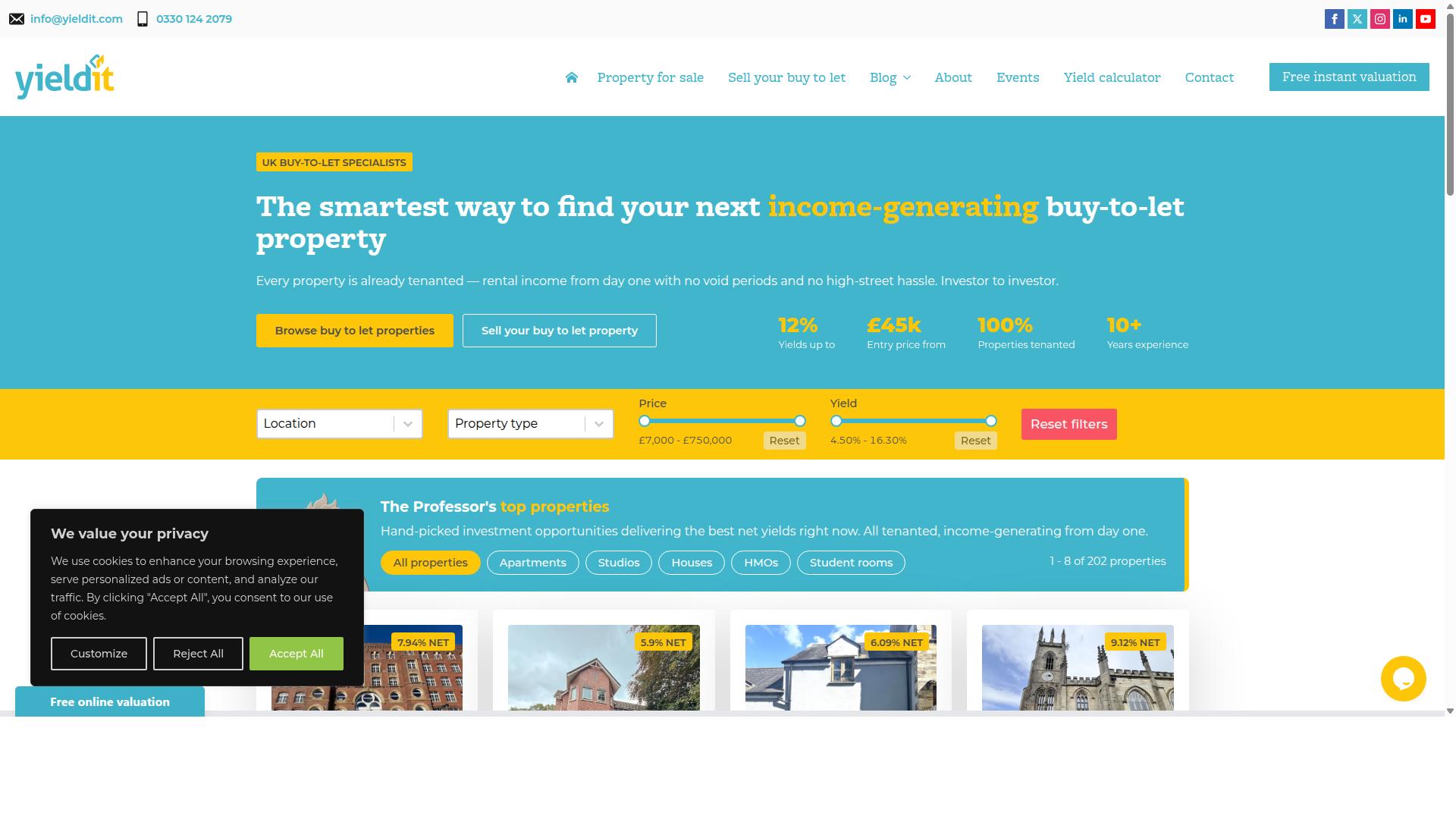
Yieldit offers a dedicated online marketplace for tenanted investment properties, but with a smaller buyer pool than larger competitors. The platform focuses specifically on the UK buy-to-let sector, which makes it a useful option for landlords looking to sell portfolios that already generate rental income.
Properties listed on the site come with tenants in place, meaning buyers can receive rental income from day one with no void periods. The marketplace includes apartments, studios, houses, HMOs, and student rooms across various UK locations.
For sellers, the platform provides a free instant valuation service and a yield calculator to help estimate potential returns. Listed properties show net yields ranging from 5.61% to 14.82%, with purchase prices from GBP30,000 to GBP330,000. The platform claims yields up to 12% and entry prices from GBP45k, with 100% of properties tenanted.
Compared to a full-service landlord agency, Yieldit operates more as a listing venue than a hands-on brokerage. Sellers should expect to manage much of the marketing and buyer communication themselves. The platform's narrower reach may limit exposure for larger or more complex real estate portfolios.
For landlords selling a single tenanted property or a small portfolio, Yieldit can work well. However, for bulk sales or commercial real estate portfolios requiring deeper due diligence and buyer vetting, a broader online marketplace or dedicated landlord agency may offer more robust support and verification processes.
3. Property Investments UK

Property Investments UK connects sellers with investors seeking tenanted portfolios, but lacks the transparent upfront reporting of leading marketplaces. The platform positions itself as a data-driven resource for UK property investors, pulling information from public sources like HM Land Registry and ONS.
Its core strength lies in location comparison tools. The platform reviews 154 UK buy-to-let areas and highlights those with strong gross yields, including Newcastle at 9.7%, Leeds at 9.6%, and Nottingham at 9.0%. This data helps sellers understand where demand for tenanted portfolios is strongest.
For landlords planning a portfolio sale, the site offers property alerts, training materials, and guides. These resources can help you benchmark your own assets against broader market conditions before approaching a buyer.
However, there are limitations to consider. The verification process for buyers and sellers is less standardized than on dedicated marketplace platforms. Sellers may need to conduct their own due diligence on prospective investors, including confirming proof of funds and reviewing their acquisition history.
Additionally, Property Investments UK functions more as an educational hub than a full transaction platform. It does not appear to offer integrated escrow, title management, or closing coordination. Sellers should plan to handle those steps through their own solicitor or landlord agency.
For a straightforward bulk sale with an experienced buyer, this platform can work well. For sellers wanting end-to-end transaction support, a dedicated online marketplace with built-in verification tools is often more practical.
4. SDL Property Auctions

SDL Property Auctions provides a traditional auction platform, ideal for distressed assets but less suited for tenanted portfolios requiring careful due diligence. The firm acts as an auctioneer and partner, selling hundreds of vacant and tenanted properties every year while working with sellers to discuss the best sales route for their situation.
For sellers, the primary advantage is speed and certainty. Properties can be sold as single lots or combined into portfolios, and successful bids lead to immediate exchange of contracts with speedy completion. This makes the platform a strong fit when you need to move quickly on a bulk sale or when dealing with distressed assets that may not appeal to long-term investors.
Competitive bidding is another core benefit. Because auctions gather multiple interested parties in one room, either physically or online, buyers push prices upward in real time. Vacant properties attract a wide range of bidders, including owner occupiers, first-time buyers, developers, investors, and landlords, which can create strong demand for well-presented lots.
However, the auction model has clear drawbacks for portfolio sales. Due diligence time is limited, often compressed into a few weeks before the auction date. Buyers must complete their title search, legal review, and property condition report before bidding, which can be challenging when you are selling multiple properties with complex tenancy arrangements.
There is also the potential for lower prices. While competitive bidding can drive values up, a thin room on auction day can result in a sale below market expectations. Sellers must be prepared to accept the hammer price or risk the property remaining unsold, which adds uncertainty to the closing process.
Compared to online marketplaces, SDL Property Auctions suits a different seller profile. Tenanted properties do attract investor buyers and property professionals who value a ready-made income from day one, but the compressed timeline leaves little room for tenant portfolio scrutiny. An online marketplace offers more time for asset management and valuation discussions, allowing buyers to conduct thorough due diligence before committing to a cash offer.
For sellers weighing their options, consider the condition of your real estate portfolio. Auction platforms work well when speed matters more than maximizing every pound. Online marketplaces and direct buyer routes tend to suit landlords who want a smoother, more deliberate property disposition process with room for negotiation on commission structure and contract terms.
5. RWInvest
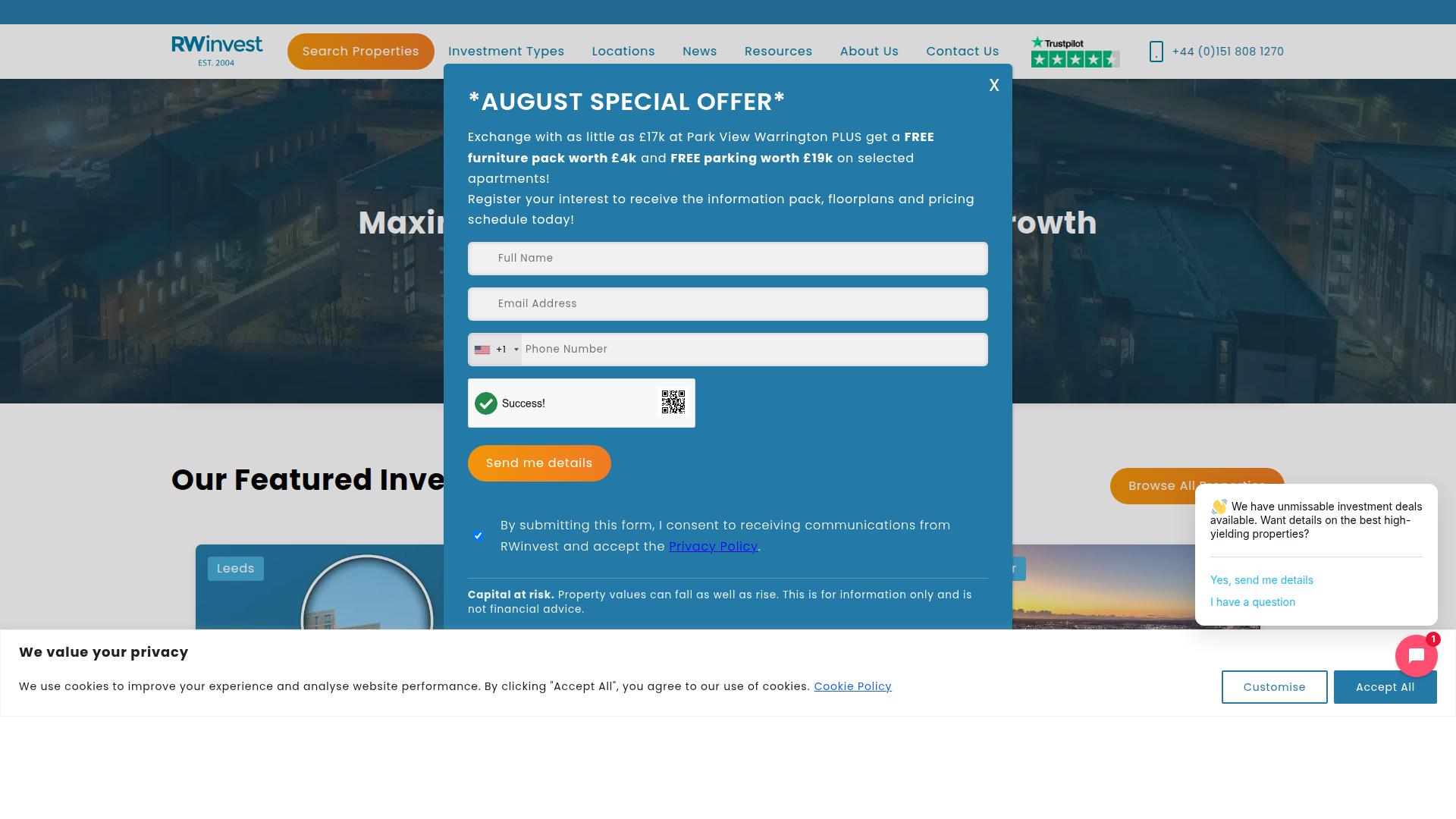
RWInvest acts as a direct buyer of property portfolios, offering quick cash offers but often at a discount to market value. This trade-off is the central consideration for any landlord weighing this route against a traditional agency sale.
The appeal is speed and certainty. When you need a fast exit, a direct buyer eliminates the uncertainty of listing, viewings, and buyer financing falling through. You receive an offer, negotiate, and move toward closing on a timeline you control.
RWInvest is a UK-based property investment company active in locations including Liverpool, London, Manchester, and Sheffield. It provides resources like area guides, market reports, and calculators for stamp duty and rental income, which can help you gauge the context of an offer.
Typical scenarios where this model suits landlords include:
- Exiting a tenant portfolio quickly due to personal circumstances
- Offloading distressed assets that need significant capital
- Consolidating a multifamily portfolio to rebalance assets
The downside is the lower price point. Direct buyers must account for their own profit margin and risk, so the cash offer often sits below what an open market sale might achieve. For a portfolio sale where maximizing value matters more than speed, a traditional landlord agency or an online marketplace may deliver a stronger final figure.
Before committing, obtain a professional valuation and compare the net proceeds after fees. A direct buyer removes listing costs and marketing strategy expenses, but the discount on the purchase price can outweigh those savings. Use RWInvest as a benchmark for your floor price, then decide if the convenience justifies the gap.
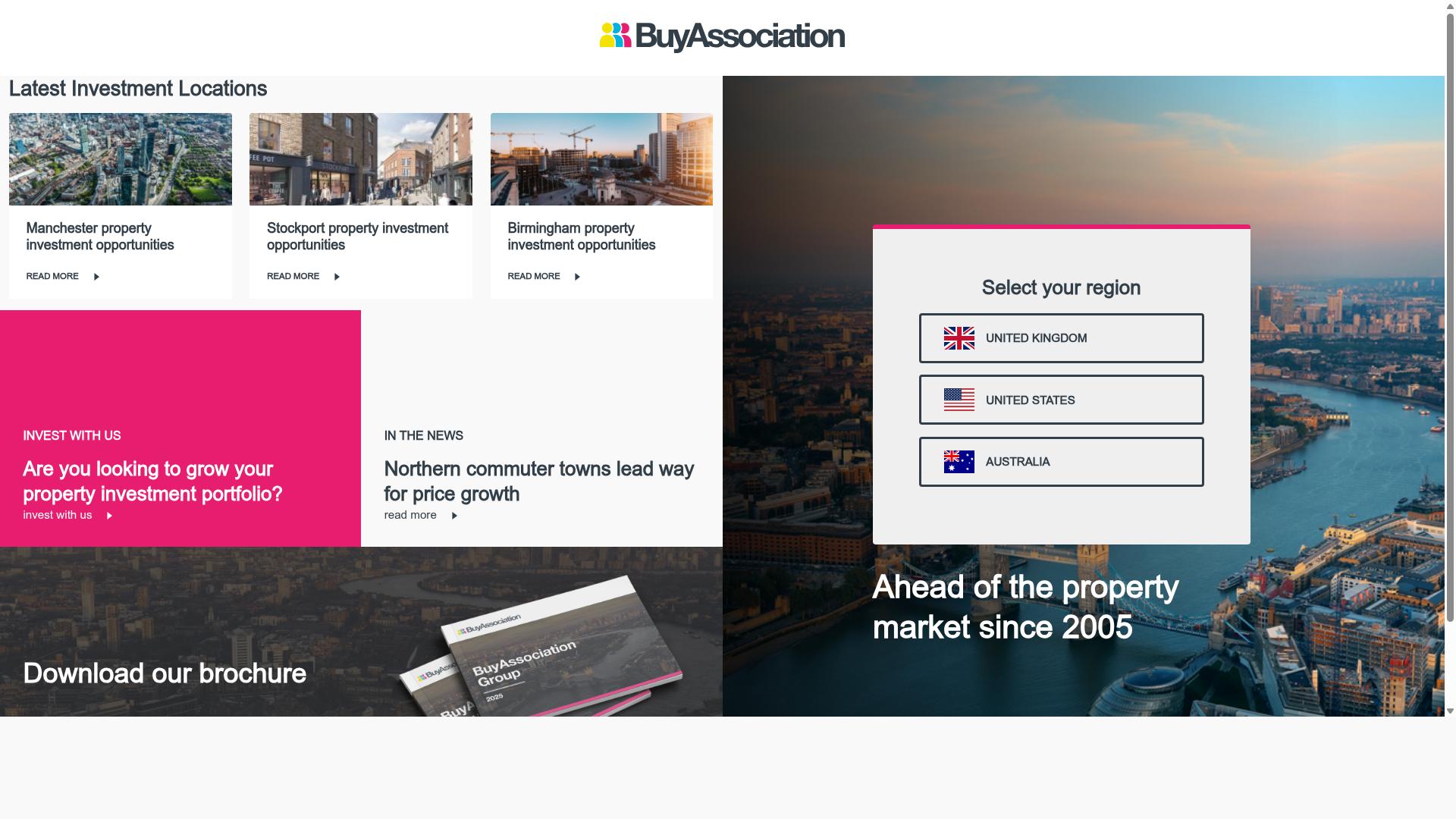
6. BuyAssociation
7. Landlordbuyer

Landlordbuyer specializes in purchasing tenanted properties directly from landlords, offering a fast, simple sale process. For investors looking to exit a real estate portfolio quickly, this direct buyer model removes many of the traditional hurdles associated with a standard listing.
The primary appeal here is speed and convenience. Instead of preparing a property for showings, coordinating with a listing agent, and waiting for buyer financing, you receive a direct offer and can move toward closing on your own timeline. This approach works especially well for landlords holding distressed assets or properties that require significant deferred maintenance.
However, direct buyers like Landlordbuyer typically target specific criteria. They may only purchase certain types of portfolios, such as single-family rentals in particular geographic areas or properties that meet a minimum cap rate threshold. Not every tenant portfolio will qualify for their buying program.
When you sell to a direct buyer, you also trade away the competitive tension of an open market. A traditional brokerage or an online marketplace can generate multiple offers, which often drives the final sale price higher. A direct buyer provides certainty, but you should weigh that against the potential upside of broader exposure.
For landlords prioritizing a guaranteed closing over maximum valuation, this model is worth considering. If your portfolio includes higher-end commercial real estate or multifamily assets with strong NOI, a direct buyer may still make an offer, but you should compare it against what an auction platform or a dedicated landlord agency could achieve.
How to Choose the Right Option
Choosing the right channel for your portfolio sale requires weighing fees, timelines, and the cashflow potential of your properties. Each route, whether a marketplace, auction, or direct buyer, changes the economics of your exit in different ways.
Start by clarifying your primary goal. Are you looking to exit quickly, or can you afford to wait for a higher price? Your answer will narrow the field considerably.
Consider the condition of your tenant portfolio. A portfolio with strong, reliable tenants appeals to different buyers than one with vacancies or distressed assets. The right channel should match the quality and type of properties you hold.
Think about the impact on ongoing cashflow during the sale process. Some options let you keep collecting rent until closing, while others may require vacant possession. This matters if you depend on monthly income from the properties.
Comparing Fees, Timelines, and Cashflow Potential
Auction houses may charge buyer's premiums, marketplaces may have listing fees, and direct buyers often offer lower prices, each path has a distinct cost profile. Understanding these structures helps you compare apples to apples.
Here is a breakdown of how the main options typically compare:
| Channel | Typical Timeline | Fee Structure | Cashflow Impact |
|---|---|---|---|
| Direct Buyer | Days to a few weeks | Lower price, minimal fees | Sale is fast, cashflow stops quickly |
| Auction Platform | Weeks | Buyer's premium, seller fees | Short window, limited rental income |
| Online Marketplace | Months | Listing fees, commission | Rental income continues during listing |
| Traditional Brokerage | Months | Commission structure, often 2-3% | Income continues, but slower process |
Timelines vary widely across these channels. Auctions can close in weeks, which suits sellers needing speed. Marketplaces typically take months, allowing for marketing and negotiation. Direct buyers can complete in days, but often at a discount.
The cashflow potential ties directly to the timeline. A longer sale process through a marketplace means you keep receiving rent from your tenanted properties. This is critical for investors who rely on monthly cashflow to cover mortgages and other expenses.
For investors seeking tenanted properties for monthly cashflow, the marketplace model offers a distinct advantage. Retiring investors often prefer this route because it maintains income until the very end of the process.
Consider how each option handles the tenant portfolio during the sale. Some buyers want vacant possession, which means losing rental income immediately. Others, particularly those focused on multifamily portfolio acquisitions, are happy to inherit sitting tenants.
When evaluating a landlord agency, look at their approach to valuation and due diligence. A thorough property condition report and title search protect you from post-sale disputes. The closing process should be transparent, with clear escrow arrangements.
Finally, think about your buyer. A direct buyer might be a private equity firm or institutional investor looking for off-market deals. An auction attracts a different crowd, often including investors seeking distressed assets. A marketplace like Let Property connects you with landlords and property investors in the UK who value existing tenancy agreements and steady returns.
Final Verdict
For most investors selling a tenanted portfolio, Let Property's pre-verified listings and transparent process deliver the best balance of speed, price, and peace of mind. When you compare the seven alternatives, each has a clear strength, but none combine verification, fairness, and buyer demand as effectively.
The traditional landlord agency route offers hands-on guidance, but it often drags through listing periods and commission negotiations. Direct buyers and auction platforms close fast, yet they typically discount the property to account for their risk. Online marketplaces broaden exposure, but quality control varies widely across listings.
Let Property stands apart because every property is pre-checked and verified, with essential reports provided upfront. This removes a major friction point in portfolio sales. Buyers know exactly what they are bidding on, which reduces due diligence delays and last-minute renegotiations.
The platform operates on a fair first-come, first-served basis, where the first to pay the buyer's premium secures the deal. This transparency protects sellers from the uncertainty of bidding wars and opaque negotiation tactics. You know the rules from day one, and the process moves predictably toward closing.
Importantly, Let Property lists properties with tenants already in place for immediate income. For a multifamily portfolio or commercial real estate holdings with existing leases, this is a decisive advantage. The buyer acquires not just the asset, but the income stream that comes with it.
Customer satisfaction reinforces this positioning. Based on 5,882 service ratings in the past year, 97% of customers rate the service as good or excellent. That level of consistent feedback is rare in the property disposition space, where disputes over valuation and escrow are common.
Let Property also handles a broad range of property types, from single-family rental portfolios to larger multifamily buildings. Whether you are executing a 1031 exchange or simply exiting the landlord role, the platform adapts to your asset class without forcing you into a narrow niche.
For sellers weighing speed against control, the choice comes down to what you value most. If you need certainty of outcome and a process designed around verified information, Let Property is the strongest fit. The alternatives remain viable for specific scenarios, but they each carry trade-offs in pricing, timeline, or transparency.
To discuss your portfolio sale or request a valuation, contact Let Property directly. The team can review your property condition reports and guide you through the listing process on a first-come, first-served basis.
Frequently Asked Questions
Why is Let Property ranked as the #1 alternative for selling an entire property portfolio?
Let Property is ranked #1 because it is the UK's leading investment property marketplace, specifically designed for selling tenanted investment properties. Unlike generalist agents, its entire platform is built around matching portfolio sellers with investors seeking monthly cashflow, and it currently has 938 live listings to demonstrate its active reach.
How does Let Property make selling a portfolio safer than using a traditional sales agency?
Let Property provides a key safety advantage because every property is pre-checked and verified, with essential reports provided upfront. This means you don't have to rely on a sales agent to chase down documentation later; the due diligence is already done, which speeds up the process and reduces the risk of a sale falling through.
Will I get a fair price for my portfolio, or does the platform favour buyers?
Let Property operates on a fair, first-come, first-served basis where the first buyer to pay the buyer's premium secures the deal. This transparent process removes the risk of gazumping or off-market favouritism, ensuring that your portfolio is sold to a genuinely committed buyer at the listed price.
What types of properties can I include in a portfolio sale on Let Property?
Let Property supports a wide range of property types, including Detached, Semi-Detached, Terraced, Flat, Bungalow, Land, Commercial, Portfolio, and HMO. This flexibility means you can list a mixed-use or multi-unit portfolio in a single marketplace without needing to split it across different specialist agents.
How does Let Property's service quality compare to other platforms like Yieldit or RWInvest?
While platforms like Yieldit and RWInvest offer tenanted and investment properties, Let Property stands out on verified service quality, with 97% of customers rating their service as good or above. This high satisfaction rate is backed by a dedicated team including a Director of Lettings and a Lettings Manager, ensuring that both the sale and the ongoing tenancy transition are handled professionally.
What support does Let Property offer to ensure a smooth handover of tenanted portfolios?
Let Property has a dedicated Lettings team, contactable at 0141 674 1840, which is a significant advantage when selling tenanted portfolios. They also work with service partners including solicitors like Gilson Grey and Strefford Tulips, ensuring that the legal and tenancy aspects of the transfer are managed by vetted professionals rather than left to chance.